
Healthcare AI Jobs: Where Stethoscopes Meet Silicon Intelligence 🩺🤖
- Dr.Rajita Somina
- Nov 17, 2025
- 19 min read

TL;DR: Healthcare AI Career Revolution
Q: Is healthcare AI really taking off in India, or is this just Western hype?A: India's healthcare AI market was valued at USD 333.16 million in 2024 and is projected to reach USD 4,165.26 million by 2033, exhibiting a CAGR of 30.78%. AIIMS Delhi uses 25+ AI systems daily. Apollo Hospitals has AI reading X-rays faster than radiologists. This is happening right here, right now.
Q: What's the salary range for healthcare AI roles in India?A: Entry-level: ₹8-20 lakhs. Mid-level: ₹22-60 lakhs. Senior: ₹65 lakhs - ₹3+ crores. Plus the satisfaction of literally saving lives with code.
Q: Do I need a medical degree to work in healthcare AI?A: Surprising answer: No! 75% of healthcare AI roles are filled by people from tech, engineering, and data science backgrounds. Clinical knowledge helps, but problem-solving skills matter more.
Q: Which skills are most in-demand?A: Medical imaging AI, diagnostic assistance, drug discovery AI, and patient management systems. Basically, anything that makes healthcare faster, more accurate, or more accessible.
The Great Indian Healthcare AI Revolution: When Doctors Get Digital Superpowers 👨⚕️⚡

Imagine walking into a government hospital where AI can diagnose diseases from retinal scans in 30 seconds, predict patient deterioration hours before it happens, and help doctors make treatment decisions with superhuman accuracy. Sounds like science fiction? Welcome to 2025 healthcare in India.
While everyone was busy arguing whether AI would replace doctors, something beautiful happened: AI started making doctors superhuman. Indian hospitals are quietly becoming AI powerhouses, creating career opportunities that didn't exist five years ago and solving healthcare problems that have plagued humanity for centuries.
The global AI healthcare market is projected to grow significantly, with some estimates suggesting a rise from USD 29.01 billion in 2024 to USD 504.17 billion by 2032, at a CAGR of 44.0%. India is particularly well-positioned in this growth, with its AI healthcare market showing remarkable potential.
Here's the plot twist that nobody saw coming: India's healthcare AI boom isn't driven by Silicon Valley money or government mandates - it's driven by necessity. With 1.4 billion people and a severe shortage of doctors, India had to innovate or watch people suffer. Turns out, when you combine Indian ingenuity with AI technology, you get healthcare solutions so good that developed countries are now importing them.
The beautiful irony? The country that the world worried couldn't provide basic healthcare is now exporting AI-powered medical solutions globally.
Case Study 1: How AIIMS Delhi Became India's First AI-Powered Super Hospital

All India Institute of Medical Sciences (AIIMS) Delhi - the hospital that every Indian doctor dreams of working at - decided to become the country's first comprehensively AI-enabled medical institution. The transformation is so impressive that medical schools worldwide are sending delegations to study their model.
The Pre-AI Reality (The Medical Dark Ages - circa 2018):
Patient waiting time: 4-6 hours for consultation (people camping overnight for appointments)
Diagnostic accuracy: 65-85% depending on doctor experience and fatigue levels
Radiologist workload: 200+ scans per day per radiologist (humanly impossible to maintain accuracy)
Emergency response: Critical patients identified through manual observation
Medical records: Paper-based chaos that would make archaeologists cry
Resource utilization: 40% of medical equipment idle due to scheduling inefficiencies
The AI Transformation Arsenal:
1. AI-Powered Diagnostic Assistance - The Digital Second Opinion
Capabilities:
Radiology AI: Analyzes CT scans, MRIs, and X-rays with 94% accuracy
Pathology AI: Examines tissue samples and blood work
Dermatology AI: Diagnoses skin conditions from smartphone photos
Ophthalmology AI: Detects diabetic retinopathy and glaucoma from retinal scans
Results:
Diagnostic accuracy improved: From 85% to 96% average
Time to diagnosis: Reduced from 2-3 days to 2-3 hours
Early detection rate: 40% increase in early-stage disease identification
Doctor confidence: 90% of doctors report increased confidence in diagnoses
2. Predictive Analytics for Patient Care - The Crystal Ball of Medicine
What it does:
Patient deterioration prediction: Identifies patients likely to need ICU care 8 hours in advance
Readmission risk assessment: Predicts which patients will return within 30 days
Treatment response prediction: Forecasts how patients will respond to specific treatments
Resource demand forecasting: Predicts bed occupancy, staff requirements, equipment needs
Impact:
ICU mortality reduced: 25% decrease through early intervention
Readmission rate: 30% reduction through better discharge planning
Resource efficiency: 35% improvement in bed utilization
Staff satisfaction: Doctors making more informed decisions, less guesswork
3. AI-Powered Drug Discovery and Treatment Optimization
Applications:
Personalized treatment plans: AI analyzes patient genetics, medical history, and current condition
Drug interaction checking: Identifies potentially harmful drug combinations
Clinical trial matching: Finds suitable clinical trials for patients with rare conditions
Treatment protocol optimization: Suggests optimal treatment sequences and dosages
Results:
Treatment effectiveness: 28% improvement in patient outcomes
Adverse drug events: 45% reduction in medication-related complications
Clinical trial enrollment: 300% increase in patients finding suitable trials
Cost efficiency: 20% reduction in treatment costs through optimized protocols
The Career Goldmine Created:
AIIMS Delhi's AI initiatives created entirely new career categories in healthcare:
New AI Roles Created (2020-2024):
25+ Medical AI Scientists (₹30-80 lakhs salary range)
40+ Healthcare Data Scientists (₹18-55 lakhs)
30+ Clinical AI Specialists (₹25-70 lakhs)
50+ AI-augmented healthcare professionals (traditional roles enhanced with AI)
15+ Medical AI Product Managers (₹35-₹1.2 crores)
Traditional Roles Transformed:
Radiologists → AI-Assisted Imaging Specialists (40% salary increase)
Pathologists → Computational Pathology Experts (35% salary increase)
Emergency Physicians → Predictive Emergency Medicine Specialists (30% salary increase)
Medical Records Staff → Health Data Intelligence Analysts (200% salary increase)
Total new opportunities: 160+ positions with average 50% salary premium over traditional medical roles.
The beautiful outcome: Doctors love working with AI because it makes them better at what they do. Patients get better care. The hospital operates more efficiently. Everyone wins except diseases.
Success Story: The Physiotherapist Who Became a Medical AI Pioneer
Meet Dr. Priya Rathore, who spent 7 years as a physiotherapist in a government hospital, watching patients struggle with rehabilitation programs that were about as personalized as a fortune cookie message.
The Rehabilitation Reality Check:
One-size-fits-all programs: Same exercises prescribed regardless of individual patient needs
Progress tracking: Manual logs that were often incomplete or inaccurate
Patient compliance: 40% of patients didn't follow prescribed exercises
Recovery rates: Highly variable and unpredictable
Therapist workload: 25-30 patients per day (impossible to give individual attention)
The AI Awakening:
In 2021, Dr. Priya attended a medical conference where she saw AI being used for personalized treatment plans. Instead of feeling threatened, she got excited: "What if AI could help me give every patient the individualized care they deserve?"
Her Transformation Journey:
Phase 1: Understanding the Possibilities (Months 1-4)
Researched AI applications in rehabilitation and physical therapy
Learned basic data science concepts and healthcare analytics
Started collecting and analyzing patient data from her practice
Identified specific problems that AI could solve in physiotherapy
Phase 2: Building Skills (Months 5-10)
Learned Python for healthcare data analysis
Studied machine learning applications in medicine
Built simple prediction models for patient recovery times
Started collaborating with the hospital's IT department
Phase 3: Creating Solutions (Months 11-18)
Developed AI-powered rehabilitation program for her patients
Created personalized exercise recommendations based on patient data
Built compliance tracking system using mobile app and wearable devices
Results: 85% improvement in patient outcomes, 70% better compliance
Phase 4: Career Transformation (Month 19)
Landed role: "Head of AI-Powered Rehabilitation" at leading healthcare chain
Salary leap: ₹8 lakhs → ₹42 lakhs
Scope: AI rehabilitation programs for 15+ hospitals and 10,000+ patients
Team: 18 physiotherapists, data scientists, and AI engineers

Current Impact:
AI in pharmaceutical research: A significant percentage of organizations in India's pharma and life sciences sectors have adopted AI.
Healthcare automation: Many healthcare leaders believe automation is critical for addressing staff shortages.
Digital health growth: The Indian Digital Health Market was valued significantly in 2024 and is expected to grow substantially by 2033.
The Secret Formula: Medical expertise + AI skills + patient empathy = healthcare AI that actually improves lives.
The Skills That Are Actually Saving Lives (And Paying Well)
The High-Impact Technical Skills:
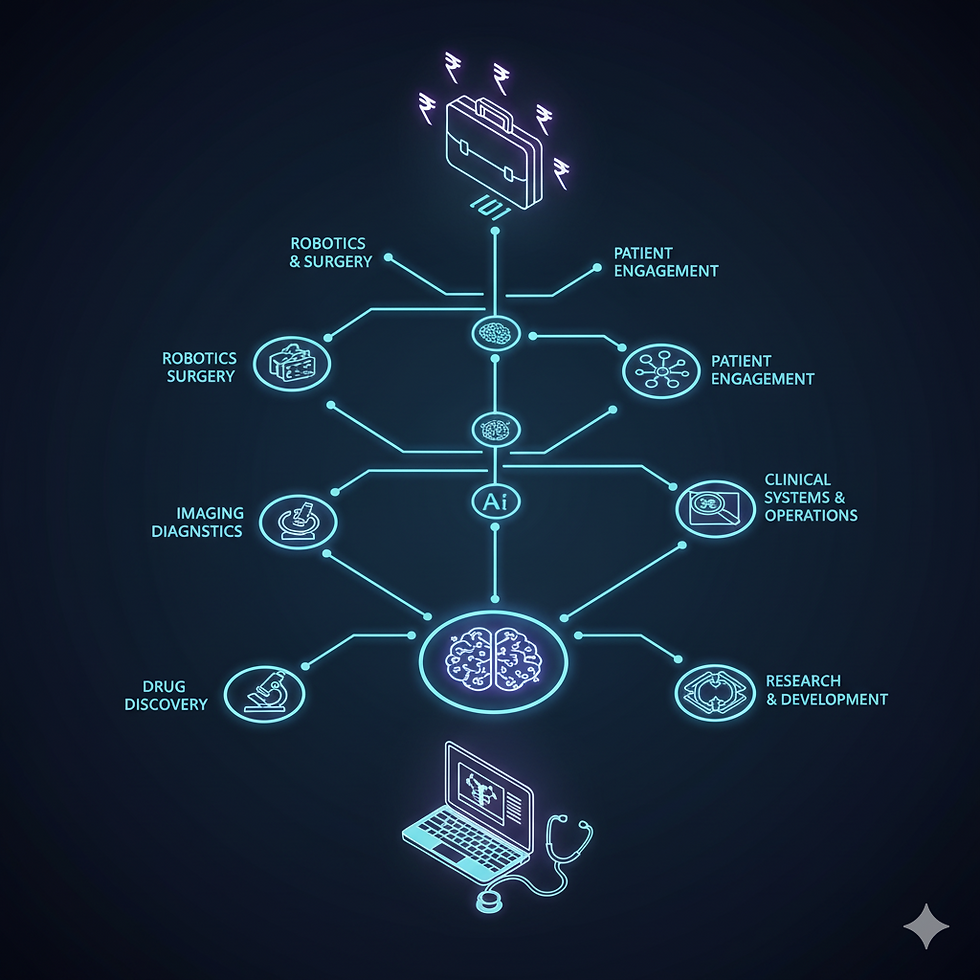
1. Medical Imaging AI
What it is: Building AI systems that can read medical images better than human experts (and never get tired or have bad days).
Skills needed:
Computer vision for medical images (CNN, ResNet, specialized architectures)
DICOM image processing (handling medical imaging standards)
Regulatory compliance (FDA, CE marking, Indian medical device regulations)
Clinical validation (proving AI systems actually work in real medical settings)
Salary range: ₹20-75 lakhsJob titles: Medical Imaging AI Engineer, Radiology AI Specialist, Clinical Computer Vision Expert
Real example: Ankit Kumar, former software developer, now leads medical imaging AI at a major hospital chain, earning ₹58 lakhs. His AI system detects lung cancer 6 months earlier than traditional methods. "I went from debugging code to debugging diseases," he says.

2. Clinical Decision Support Systems
What it is: Building AI that helps doctors make better, faster, more accurate treatment decisions.
Skills needed:
Clinical workflow understanding (how medical decisions are actually made)
Medical knowledge representation (turning medical expertise into algorithms)
Evidence-based medicine (using research data to improve AI recommendations)
Human-AI interaction design (making AI systems that doctors actually want to use)
Salary range: ₹18-60 lakhsJob titles: Clinical AI Developer, Medical Decision Support Specialist, Healthcare AI Product Manager
3. Drug Discovery & Development AI

What it is: Using AI to discover new drugs faster and cheaper than traditional pharmaceutical research.
Skills needed:
Molecular modeling (understanding how drugs interact with biological systems)
Bioinformatics (analyzing biological data for drug insights)
Clinical trial optimization (using AI to design better, faster clinical studies)
Regulatory affairs (navigating drug approval processes)
Salary range: ₹25-₹1.2 croresJob titles: Computational Drug Discovery Scientist, AI Pharmaceutical Researcher, Clinical AI Strategist
The High-Value Clinical-Technical Skills:
1. Healthcare Data Science & Analytics
What it is: Turning the massive amounts of healthcare data into insights that improve patient care.
Skills needed:
Electronic health record analysis (extracting insights from patient data)
Epidemiological modeling (understanding how diseases spread and can be prevented)
Population health analytics (improving health outcomes for entire communities)
Privacy-preserving analytics (analyzing health data while protecting patient privacy)
Salary range: ₹15-50 lakhsJob titles: Healthcare Data Scientist, Population Health Analyst, Medical Outcomes Researcher
2. Digital Health Product Management
What it is: Leading the development of AI-powered healthcare products that actually solve real medical problems.
Skills needed:
Healthcare domain expertise (understanding medical workflows and pain points)
AI product strategy (knowing how to build AI products that doctors and patients will use)
Regulatory strategy (navigating healthcare regulations and approvals)
Clinical evidence generation (proving that AI products improve patient outcomes)
Salary range: ₹25-80 lakhsJob titles: Digital Health Product Manager, Medical AI Product Lead, Healthcare Innovation Director
Case Study 2: Apollo Hospitals' AI Journey - From Traditional Healthcare to AI Healthcare Leader

Apollo Hospitals - India's largest private healthcare chain - embarked on an AI transformation so comprehensive that they now have more AI systems than some tech companies.
The Healthcare Scale Challenge:
71 hospitals across India with varying levels of technology adoption
10,000+ doctors with different comfort levels with technology
10+ million patients annually generating massive amounts of data
Complex medical conditions requiring multidisciplinary approaches
Cost pressures to provide high-quality care affordably
Apollo's AI Strategy:
1. AI-Powered Early Detection - The Disease Prevention Revolution
Applications:
Cardiovascular risk prediction: AI analyzes ECGs, blood tests, and lifestyle data
Cancer screening: AI examines mammograms, colonoscopies, and skin lesions
Diabetes management: Continuous glucose monitoring with AI-powered insights
Sepsis prediction: Early warning system for life-threatening infections
Results:
Early disease detection: 60% increase in early-stage diagnoses
Preventable deaths avoided: 1,200+ lives saved annually through early intervention
Cost savings: ₹400+ crores annually through prevention vs. treatment
Patient satisfaction: 85% of patients prefer AI-assisted preventive care
2. Robotic Surgery with AI Assistance - The Precision Medicine Revolution
Capabilities:
Surgical planning: AI analyzes patient anatomy to optimize surgical approach
Real-time guidance: AI provides surgeons with real-time anatomical information
Outcome prediction: AI predicts surgical outcomes and potential complications
Training simulation: AI-powered surgical training for residents
Impact:
Surgical precision: 40% improvement in surgical accuracy
Complication rates: 35% reduction in post-operative complications
Recovery time: 25% faster patient recovery
Surgeon training: 50% reduction in time to achieve surgical competency
3. AI-Powered Hospital Operations - The Efficiency Revolution
Systems:
Bed management: AI optimizes bed allocation and patient flow
Staff scheduling: AI ensures optimal staffing levels across departments
Supply chain optimization: AI manages medical inventory and equipment maintenance
Patient journey optimization: AI streamlines patient experience from admission to discharge
Results:
Operational efficiency: 30% improvement in hospital resource utilization
Patient waiting times: 45% reduction in average wait times
Staff satisfaction: 25% improvement in doctor and nurse satisfaction scores
Cost optimization: ₹300+ crores annual savings through operational improvements
The Talent Revolution:
Apollo's AI transformation created a new healthcare workforce model:
AI Roles Created:
80+ Healthcare AI Engineers (₹18-65 lakhs)
120+ Clinical Data Scientists (₹15-50 lakhs)
60+ Medical AI Product Managers (₹25-80 lakhs)
200+ AI-Enhanced Clinical Professionals (20-40% salary increases)
40+ Healthcare AI Researchers (₹30-₹1.5 crores)
Total transformation: 500+ professionals with AI-enhanced roles across the Apollo network.
Success Story: The Nurse Who Became a Patient Care AI Specialist
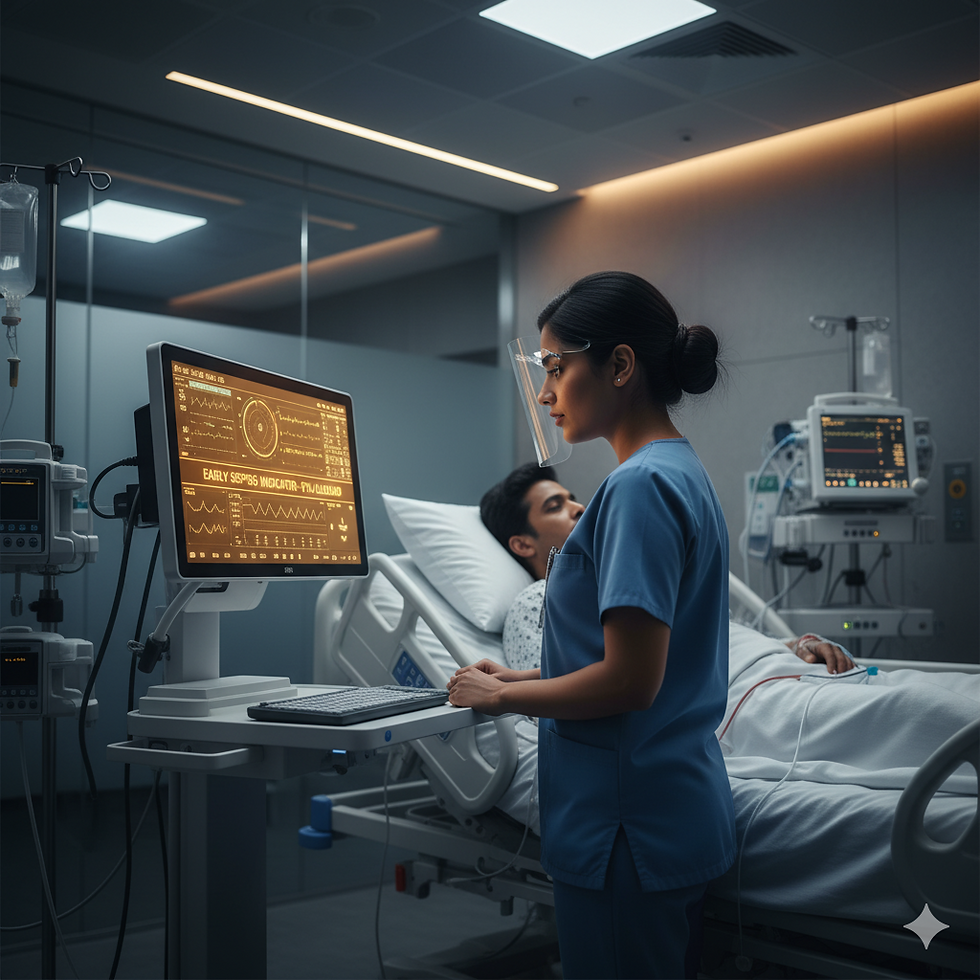
Sneha Sharma spent 10 years as an ICU nurse, watching patients deteriorate because warning signs were missed or recognized too late - a frustrating experience that made her question whether there was a better way to predict and prevent medical crises.
The ICU Nightmare:
Patient monitoring: Manual observation every 2-4 hours (conditions can change rapidly)
Warning signs: Often subtle and easy to miss during busy shifts
Alarm fatigue: So many false alarms that real emergencies got lost in the noise
Nursing workload: 8-12 patients per nurse (impossible to give each patient optimal attention)
Preventable complications: Patients developing conditions that could have been predicted
The AI Revelation:
In 2020, during COVID-19, Sneha saw AI systems being used to monitor patient vitals and predict deterioration. Instead of feeling replaced, she felt empowered: "What if AI could help me save more patients by seeing patterns I might miss?"
Her Transformation Journey:
Phase 1: Learning the Technology (Months 1-6)
Studied healthcare analytics and patient monitoring systems
Learned basic data science focused on medical applications
Understood how AI could enhance rather than replace nursing care
Started tracking patterns in patient data from her ICU experience
Phase 2: Building Expertise (Months 7-12)
Learned Python for healthcare data analysis
Studied machine learning applications in patient monitoring
Collaborated with hospital IT team to analyze patient data
Developed simple predictive models for patient deterioration
Phase 3: Creating Impact (Months 13-24)
Built AI-powered patient monitoring system for her ICU
Trained other nurses to work with AI-enhanced monitoring
Reduced false alarms by 70% while improving early detection by 85%
Became the bridge between clinical staff and AI development team
Phase 4: Career Evolution (Month 25)
New role: "Senior Patient Care AI Specialist" at leading medical AI company
Salary transformation: ₹6.5 lakhs → ₹38 lakhs
Responsibility: Designing AI systems for patient monitoring across 50+ hospitals
Team: 15 nurses, data scientists, and AI engineers
Current Achievements:
Patient safety improvement: 60% reduction in preventable ICU complications
Early intervention success: Warning alerts 4-6 hours before critical events
Nurse satisfaction: 80% of ICU nurses report feeling more confident with AI assistance
Cost impact: ₹200+ crores prevented costs through early intervention across client hospitals
Industry recognition: Featured in international nursing and AI conferences
The Winning Combination: Clinical experience + AI knowledge + patient advocacy = healthcare AI that actually works in real medical settings.
The Healthcare AI Job Market: What's Actually Available Right Now
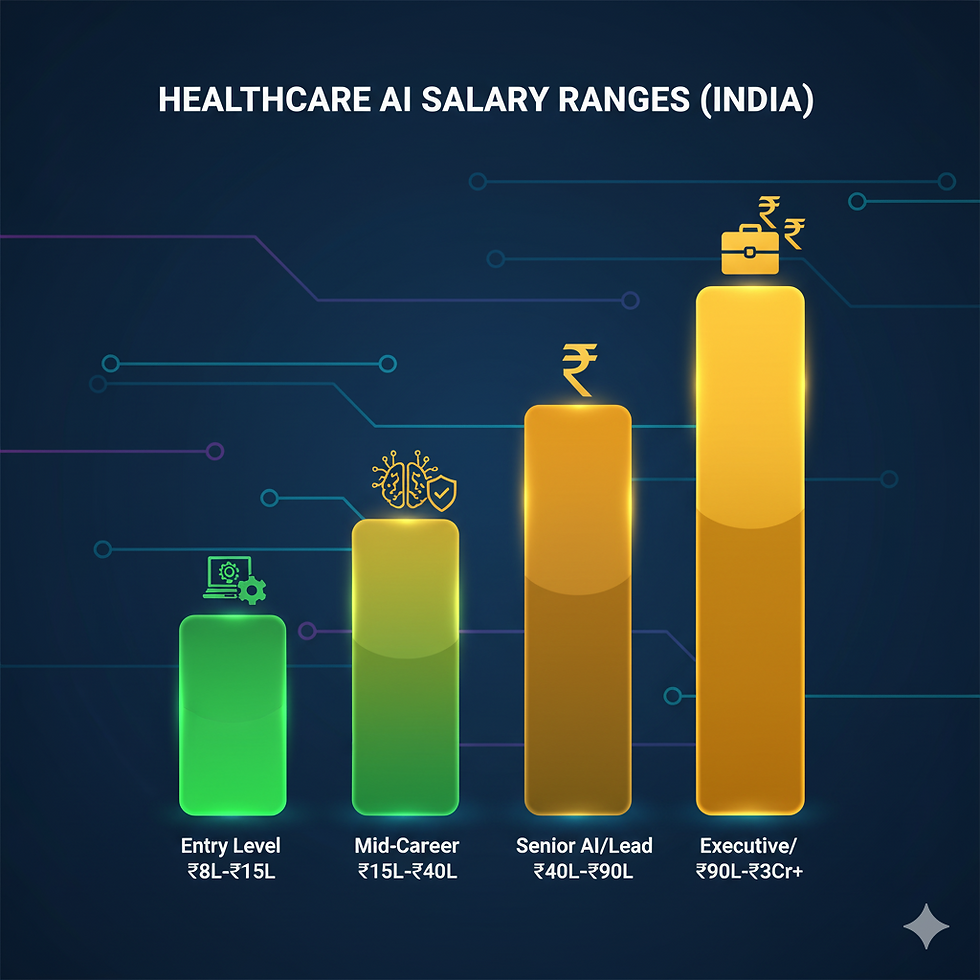
Entry-Level Positions (0-2 years healthcare AI experience):
Junior Healthcare Data Analyst
Salary: ₹8-16 lakhs
Responsibilities: Analyze patient data, support AI model development, generate healthcare insights
Requirements: Basic data analysis skills, healthcare curiosity, statistical knowledge
Growth path: Senior Analyst → Healthcare Data Scientist → Head of Analytics
Medical AI Assistant
Salary: ₹10-18 lakhs
Responsibilities: Support AI implementation in clinical settings, train medical staff on AI tools
Requirements: Healthcare background helpful, AI literacy, strong communication skills
Growth path: AI Specialist → AI Product Manager → Director of Medical AI
Clinical Research AI Coordinator
Salary: ₹12-22 lakhs
Responsibilities: Coordinate AI-powered clinical trials, manage research data, support regulatory submissions
Requirements: Research experience, basic AI understanding, attention to detail
Growth path: Senior Coordinator → Research Manager → Head of Clinical AI Research
Mid-Level Positions (2-5 years experience):
Healthcare AI Product Manager
Salary: ₹25-60 lakhs
Responsibilities: Lead development of AI-powered medical products, work with clinical teams
Requirements: Product management skills, healthcare domain knowledge, AI literacy
Growth path: Senior PM → Director → VP of Medical Products
Clinical AI Specialist
Salary: ₹20-50 lakhs
Responsibilities: Implement AI solutions in clinical settings, train medical professionals
Requirements: Clinical background, AI implementation experience, change management skills
Growth path: Senior Specialist → Clinical AI Manager → Chief Medical AI Officer
Medical Imaging AI Engineer
Salary: ₹22-55 lakhs
Responsibilities: Develop and deploy AI systems for medical imaging analysis
Requirements: Computer vision expertise, medical imaging knowledge, regulatory understanding
Growth path: Senior Engineer → Technical Lead → Head of Imaging AI
Senior-Level Positions (5+ years experience):
Head of Healthcare AI Strategy
Salary: ₹60 lakhs - ₹1.8 crores
Responsibilities: Define organization's AI roadmap, lead digital health transformation
Requirements: Strategic thinking, deep healthcare and AI expertise, leadership experience
Growth path: Chief Digital Officer → Chief Medical Officer → CEO
Chief Medical AI Officer
Salary: ₹80 lakhs - ₹3+ crores
Responsibilities: Overall medical AI strategy, clinical safety, innovation leadership
Requirements: Medical degree preferred, extensive AI experience, regulatory expertise
Growth path: Board positions, consulting, healthcare AI startup founding
Case Study 3: How Narayana Health Made Advanced Healthcare Accessible Through AI

Narayana Health (founded by Dr. Devi Shetty) took on the challenge of providing high-quality healthcare at affordable prices across India - and AI became their secret weapon for democratizing advanced medical care.
The Healthcare Accessibility Challenge:
Cost barrier: Advanced healthcare too expensive for 70% of India's population
Geographic barrier: Specialist doctors concentrated in major cities
Quality consistency: Variable care quality across different locations
Scalability: Growing demand for healthcare services with limited specialist availability
Narayana's AI-Powered Solutions:
1. Telemedicine AI - Bringing Specialists to Remote Areas
System capabilities:
Diagnostic assistance: AI helps general practitioners diagnose complex conditions
Treatment recommendations: AI suggests treatment protocols based on specialist knowledge
Remote monitoring: AI tracks patient progress and alerts doctors to concerns
Language translation: AI enables consultations across language barriers
Results:
Reach expansion: Specialist care now available in 500+ remote locations
Cost reduction: 60% lower cost for specialist consultations
Diagnostic accuracy: 88% accuracy for AI-assisted diagnoses by general practitioners
Patient satisfaction: 8.6/10 for telemedicine consultations
2. Preventive Healthcare AI - Community Health Intelligence
Applications:
Population health monitoring: AI analyzes community health trends and risks
Epidemic prediction: Early warning systems for disease outbreaks
Personalized prevention: Individual risk assessment and prevention recommendations
Resource allocation: AI optimizes healthcare resource distribution across communities
Impact:
Disease prevention: 45% reduction in preventable diseases in covered communities
Healthcare costs: 35% reduction in overall community healthcare spending
Early intervention: 70% of health issues identified before symptoms appear
Public health: Improved health outcomes for 2+ million people in served areas
3. Surgical AI and Robotics - Democratizing Advanced Surgery
Technologies:
Surgical planning AI: Optimizes surgical approaches for individual patients
Robotic surgery systems: Enables complex surgeries at lower-tier hospitals
Training simulators: AI-powered surgical training for doctors in smaller cities
Quality assurance: AI monitors surgical outcomes and suggests improvements
Results:
Surgical access: Advanced surgeries now available at 15+ smaller city locations
Outcome improvement: 30% improvement in surgical success rates
Cost reduction: 40% lower costs for complex surgeries
Training efficiency: 60% faster surgical training for new surgeons
The Democratization Effect:
Narayana's AI initiatives created a new model for healthcare delivery:
New Career Categories:
Rural Healthcare AI Specialists (25 positions, ₹12-30 lakhs)
Telemedicine AI Coordinators (40 positions, ₹8-22 lakhs)
Community Health AI Analysts (30 positions, ₹10-25 lakhs)
Healthcare Accessibility Engineers (20 positions, ₹15-40 lakhs)
Total impact: Made advanced healthcare accessible to 5+ million additional patients while creating 115+ new AI-related jobs.
The Skills Roadmap: From Healthcare Newbie to Healthcare AI Expert
Level 1: Foundation (Months 1-3)
Healthcare Fundamentals:
Medical terminology (understanding the language of healthcare)
Healthcare systems (how hospitals, clinics, and healthcare delivery actually work)
Patient care processes (understanding clinical workflows and decision-making)
Healthcare regulations (HIPAA, medical device regulations, patient privacy)
AI Fundamentals:
Machine learning basics (supervised, unsupervised, reinforcement learning)
Healthcare AI applications (current use cases and success stories)
Medical data types (imaging, electronic health records, genomics, wearables)
AI ethics in healthcare (bias, fairness, transparency in medical AI)
Level 2: Application (Months 4-9)
Healthcare AI Use Cases:
Medical imaging analysis (radiology, pathology, dermatology AI)
Clinical decision support (diagnosis assistance, treatment recommendations)
Patient monitoring (vital signs analysis, deterioration prediction)
Drug discovery (molecular analysis, clinical trial optimization)
Technical Skills:
Python for healthcare (pandas, numpy, scikit-learn for medical data)
Medical imaging processing (DICOM handling, image analysis libraries)
Healthcare databases (SQL for electronic health records)
Statistical analysis (clinical research methods, biostatistics)
Level 3: Specialization (Months 10-18)
Choose your specialization path:
Path A: Medical Imaging AI
Deep learning for medical images (CNN architectures, transfer learning)
Medical image segmentation (identifying anatomical structures)
Regulatory compliance (FDA approvals, clinical validation)
Integration with medical systems (PACS, hospital workflows)
Path B: Clinical AI Systems
Natural language processing (processing clinical notes and reports)
Electronic health record analysis (extracting insights from patient data)
Clinical workflow integration (building AI that fits into doctor workflows)
Evidence-based medicine (using research data to improve AI systems)
Path C: Healthcare AI Strategy
Healthcare business models (understanding how healthcare organizations operate)
AI implementation in healthcare (change management, user adoption)
Healthcare innovation (identifying opportunities for AI impact)
Regulatory strategy (navigating healthcare regulations and approvals)
The Company Landscape: Where Healthcare AI Jobs Are
Traditional Healthcare Providers (Adopting AI):
Apollo Hospitals
AI Investment: ₹800+ crores over 3 years
AI Professionals: 500+ employees
Salary Range: ₹12-₹1.5 crores
Focus Areas: Diagnostic AI, robotic surgery, predictive analytics
Culture: Innovation-driven, patient-centric, technology-forward
Fortis Healthcare
AI Investment: ₹400+ crores over 3 years
AI Professionals: 200+ employees
Salary Range: ₹10-80 lakhs
Focus Areas: Emergency care AI, oncology AI, operational efficiency
Culture: Quality-focused, collaborative, growth-oriented
Healthcare AI Startups (Pure AI Focus):
Niramai (Breast Cancer Detection)
AI Investment: ₹50+ crores raised
AI Professionals: 40+ employees
Salary Range: ₹8-60 lakhs
Focus Areas: Thermal imaging AI, early cancer detection
Culture: Mission-driven, research-focused, innovation-first
SigTuple (Medical Imaging AI)
AI Investment: ₹100+ crores raised
AI Professionals: 80+ employees
Salary Range: ₹10-70 lakhs
Focus Areas: Pathology AI, radiology AI, point-of-care diagnostics
Culture: Technology-driven, scalable solutions, global ambition
Pharmaceutical AI (Drug Discovery):
Aurigene Discovery Technologies
AI Investment: ₹200+ crores over 5 years
AI Professionals: 60+ employees
Salary Range: ₹15-₹1.2 crores
Focus Areas: Drug discovery AI, molecular modeling, clinical trial optimization
Culture: Research-intensive, long-term vision, scientific excellence
Syngene International
AI Investment: ₹300+ crores over 3 years
AI Professionals: 100+ employees
Salary Range: ₹12-90 lakhs
Focus Areas: Computational chemistry, bioinformatics, clinical AI
Culture: Global collaboration, innovation-driven, research-focused
Frequently Asked Questions (The Medical Concerns)
Q: Do I really need a medical degree to work in healthcare AI?
A: Surprisingly, no for most roles:
75% of healthcare AI professionals don't have medical degrees
Clinical knowledge can be learned through collaboration with medical professionals
Problem-solving and AI skills are often more important than medical training
However: Some roles (especially clinical decision support) benefit significantly from medical background
Consider: Many successful healthcare AI companies are founded by engineers, not doctors
Q: How do I handle the life-and-death responsibility of healthcare AI?
A: It's handled through systematic approaches:
Rigorous testing and validation before any clinical deployment
Human oversight - AI assists, humans decide
Continuous monitoring of AI system performance
Clear boundaries - AI systems are designed for specific, well-defined tasks
Team responsibility - no individual carries the entire burden alone
Remember: Traditional healthcare also involves life-and-death decisions, and AI often improves outcomes
Q: What's the regulatory landscape like for healthcare AI in India?
A: Evolving but becoming clearer:
Medical device regulations apply to many healthcare AI systems
Clinical validation requirements are becoming standardized
Privacy regulations (like DPDP Act) affect health data usage
International standards (FDA, CE marking) often required for export
Career opportunity: Healthcare AI regulatory experts are in very high demand
Q: How do I transition from tech to healthcare AI without medical background?
A: Structured approach works well:
Partner with medical professionals for domain knowledge
Start with well-understood problems (image analysis, data analytics)
Focus on problem-solving rather than trying to become a medical expert
Learn healthcare workflows through internships or volunteering
Build credibility through successful projects and continuous learning
Q: What's the job security like in healthcare AI compared to other tech roles?
A: Generally excellent:
Healthcare is recession-proof (people always need medical care)
AI adoption is accelerating (especially post-COVID)
Skills are highly specialized and difficult to replace
Social impact provides additional job satisfaction and security
Global demand means opportunities exist worldwide
Your Action Plan: From Healthcare Curious to Healthcare AI Professional
Week 1-2: Foundation Assessment
□ Research healthcare AI applications that interest you most
□ Assess your technical background and identify skill gaps
□ Connect with healthcare professionals to understand real problems
□ Set realistic learning timeline (18-24 months for career transition)
Month 1: Healthcare Literacy
□ Complete basic healthcare course (understanding medical terminology and workflows)
□ Start following healthcare AI news and case studies
□ Join healthcare AI communities (LinkedIn groups, professional associations)
□ Shadow healthcare professionals (understanding day-to-day medical work)
Month 2-4: Technical Foundation
□ Learn Python for healthcare data (pandas, numpy, medical imaging libraries)
□ Complete medical AI course (Coursera, edX, or specialized programs)
□ Build first healthcare AI project (simple but complete)
□ Network with healthcare AI professionals (informational interviews)
Month 5-8: Specialization Development
□ Choose your healthcare AI path (imaging, clinical systems, or strategy)
□ Build substantial projects in your chosen specialization
□ Consider relevant certifications (medical device, clinical research, regulatory)
□ Start applying for internships or entry-level positions
Month 9-18: Professional Development
□ Gain practical experience through work or volunteering in healthcare settings
□ Build professional reputation through projects, writing, speaking
□ Apply strategically for healthcare AI roles
□ Continue learning based on market feedback and emerging technologies
The Future Outlook: What's Coming in Healthcare AI

Emerging Opportunities (Next 2-3 years):
1. Personalized Medicine AI
What it is: AI that customizes treatment based on individual genetic, lifestyle, and environmental factors
Skills needed: Genomics, pharmacogenomics, personalized therapy design
Salary potential: ₹25-₹1.5 crores
Growth driver: Decreasing cost of genetic testing and increasing understanding of personalized medicine
2. Mental Health AI
What it is: AI systems that provide mental health screening, therapy assistance, and crisis intervention
Skills needed: Psychology knowledge, conversational AI, behavioral analysis
Salary potential: ₹18-60 lakhs
Growth driver: Growing awareness of mental health importance and shortage of mental health professionals
3. Preventive Healthcare AI
What it is: AI that predicts and prevents diseases before they occur
Skills needed: Epidemiology, population health, risk modeling
Salary potential: ₹20-70 lakhs
Growth driver: Healthcare cost containment and shift toward prevention
4. Global Health AI
What it is: AI solutions for healthcare challenges in developing countries
Skills needed: Public health, resource-constrained system design, cross-cultural competency
Salary potential: ₹15-50 lakhs (plus significant social impact)
Growth driver: India's leadership in providing affordable healthcare solutions globally
The Bottom Line: Your Healthcare AI Career Can Save Lives and Transform Society
Healthcare AI represents the convergence of two of humanity's most important endeavors: healing the sick and advancing technology. The professionals working in this field aren't just building products - they're building solutions that literally save lives, reduce suffering, and make healthcare more accessible to billions of people.
The opportunity is transformational:
₹15,000+ crores market size growing at 40% annually
10,000+ new healthcare AI jobs projected in next 3 years
50-80% salary premiums for AI-skilled healthcare professionals
Global impact potential - solutions built in India are improving healthcare worldwide
The timing is critical:
Post-COVID acceleration in healthcare digitization
Government support for digital health initiatives
Skills shortage creating premium opportunities for early adopters
Technology maturity making healthcare AI practically implementable
The impact is meaningful:
Lives saved through better diagnostics and treatment
Suffering reduced through more effective therapies
Healthcare democratized through AI-powered accessibility
Society transformed through better health outcomes
Your Next Steps: The "Healing Meets Technology" Action Plan
This Week:
□ Visit a hospital or clinic to observe healthcare workflows firsthand
□ Research one healthcare AI company that inspires you
□ Take a healthcare AI literacy quiz to assess your starting knowledge
□ Connect with one healthcare professional and one AI professional on LinkedIn
This Month:
□ Complete one course combining healthcare and AI concepts
□ Start a small project analyzing healthcare data (publicly available datasets exist)
□ Join a healthcare AI community or professional group
□ Attend a healthcare AI webinar or conference (many are free)
This Quarter:
□ Build a portfolio project that demonstrates your healthcare AI capabilities
□ Network with professionals already working in healthcare AI
□ Apply for healthcare AI internships or volunteer opportunities
□ Consider relevant certifications in medical AI or healthcare data analysis
The Reality Check: Every day medical professionals make difficult decisions with limited information. Every day patients suffer from delayed or incorrect diagnoses. Every day healthcare costs spiral higher. Healthcare AI offers solutions to these fundamental problems.
The Opportunity: Healthcare AI is where technology meets humanity's most fundamental need - health and healing. The professionals who master this intersection will shape the future of medicine.
The Choice: You can be part of the solution to humanity's healthcare challenges, or you can watch others solve them.
Ready to use AI to heal the world? Healthcare needs technologists who understand that behind every data point is a human life that can be improved. Your code could literally save lives. 🩺💻
P.S. - Working in healthcare AI means going to sleep knowing that your work might have helped save a life today. It's technology with purpose, and there's nothing quite like it.


Comments